at your own pace
Tell the consultant whether you want to take it slow or explore as much as possible. Reserve time for rest and transportation to plan your trip more leisurely.
 CTG TravelCTG TRAVEL
 Kunming KanghuiCo-creation partnerPlan your trip
The layers of the mountain city, the fireworks in the streets
plan mineChongqingjourneyDestination introduction · Retain from the original site
Chongqing is a city built on mountains and prospered by rivers. The Yangtze River and Jialing River meet here, and mountains, bridges, streets and buildings together form a layered urban landscape. Walking along the ramp and passing through a set of stairs, the view in front of you may change: just now you are in the streets, and when you turn the corner, you can see the river and tall buildings in the distance. There are lively commercial streets, vibrant communities, historical towns, magnificent canyons and rich cultural heritage. When you come to Chongqing, you can enjoy the night view of the mountain city, taste local delicacies, or slowly walk into the neighborhoods and feel the hearty, lively and resilient life temperament of this city.
To understand Chongqing, you can start from Chaotianmen at the intersection of the two rivers. Standing on the riverside, you can intuitively feel the relationship between the river, docks, bridges and the city. Waterways once played an important role in Chongqing's transportation and commerce, and also affected the city's development and daily life. Today, the public space and modern architecture on the river bank give the place a new look. Walking along the riverside area, you can observe the scenery on both sides, watch the ships passing by, and feel the city unfolding layer by layer on both sides of the water. The river breeze and wide view also make the compact city tour more stretchable.
The area around Jiefangbei shows the bustling urban life of Chongqing. Commercial streets, restaurants and high-rise buildings gather together to form a lively and dynamic neighborhood. For first-time visitors, this is a suitable starting point for getting to know the city center, and it is also convenient for combining shopping, dining and surrounding walking. In addition to paying attention to landmarks and large shopping malls, you can also walk into side roads to see ordinary shops and community life. Chongqing’s urban temperament is not only present in the grand landscape, but also reflected in street conversations, busy restaurants and people’s natural daily rhythms.
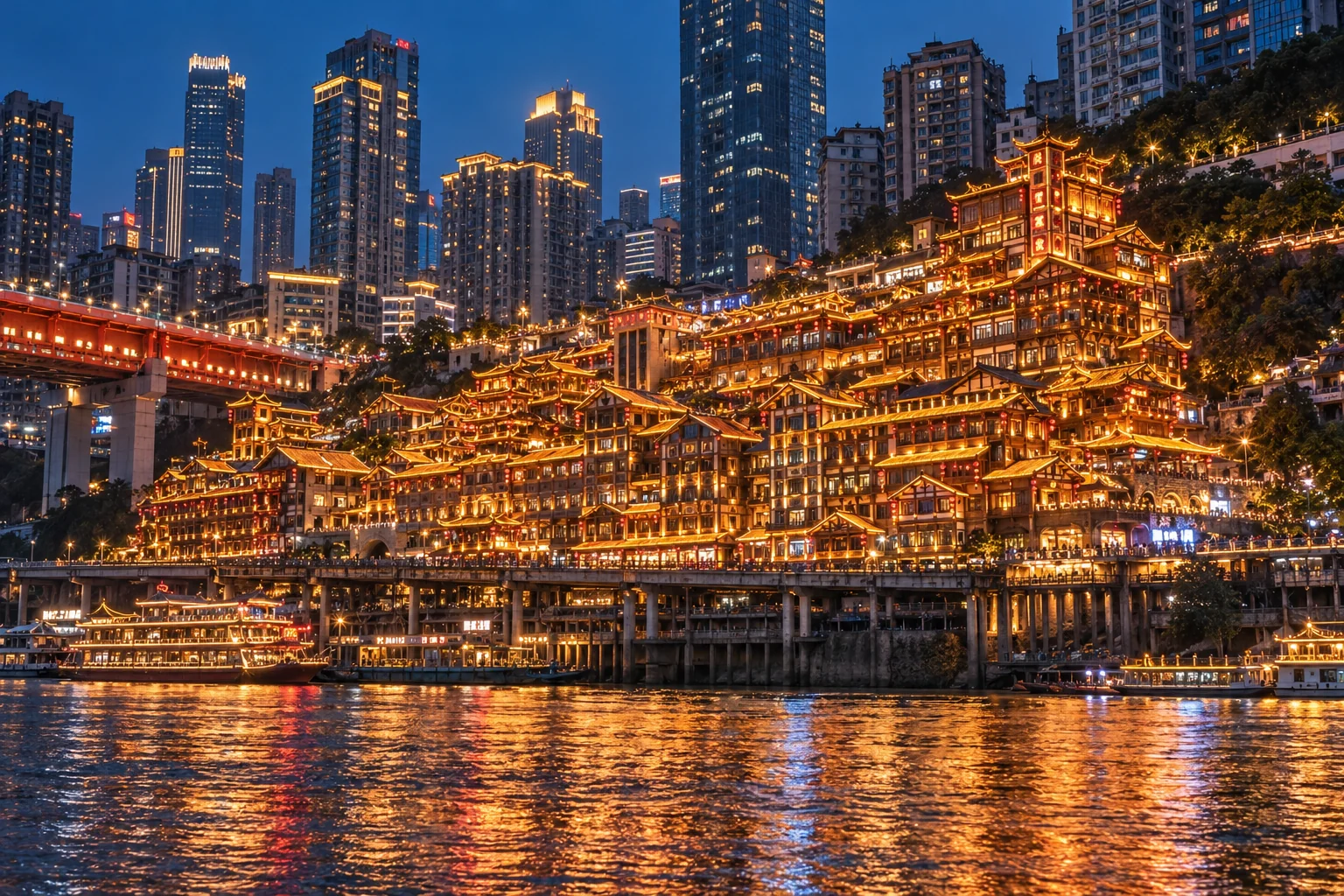
Hongya Cave is a representative viewing location in Chongqing. The building complex built against the mountain creates a distinct visual impression with its stacked space and stilt style. During the day, you can observe the relationship between the building and the terrain, and at night, when the lights are on, it presents a lively and bright atmosphere. To appreciate Hongya Cave, you might as well view it from different positions: feel the architectural details from close up, and observe the overall outline and riverside environment from a distance. Combining this place with surrounding walking routes can also allow visitors to understand why mountain city architecture often unfolds layer by layer with height differences, rather than just staying in a night view photo.
The night view of Chongqing is a city image shaped by mountains and rivers. The lights rise along the slope, the bridge spans the river, and the reflection of the building changes gently with the water flow, forming rich light and dark and layers. Areas such as Nanbin Road on the south bank provide an angle for appreciating the city outline on the opposite bank; by choosing a suitable viewing spot, you can also see the relationship between the two rivers and different neighborhoods. You don’t need to rush to chase multiple locations for night views. Find a place with a comfortable view and slowly watch the sky change from evening to night. You can often better appreciate the spatial charm of the city.
Rail transit provides Chongqing with a unique way of observing the city. The train passes between mountains, buildings and bridges, and the views constantly change along the way, making daily transportation a part of the travel experience. Liziba Station has attracted attention because of the scene where the tracks pass through the building, showing a way of adapting urban transportation to complex terrain. Visitors can watch in designated viewing areas, or take a ride to experience the environment along the route. Understanding how these facilities serve urban life is more rewarding than simply looking for novel pictures, and it also allows people to see Chongqing’s development wisdom under mountainous conditions.
Blocks such as Shancheng Alley and Shibati provide visitors with the opportunity to get to know Chongqing on foot. The height differences between stairs, ramps, courtyards and buildings constitute a street space that is different from plain cities. Walking along the road, you can observe the doors, windows, walls and street corners, and you can also stop in the shops to feel the connection between the historical district and contemporary life. Some areas have been updated to incorporate catering, exhibitions and leisure content. When visiting, you can not only appreciate the preserved historical traces, but also understand how the neighborhood is used today. Wearing a pair of walking shoes and allowing for rest time will make it easier to enjoy a walk in the mountain town.
Ciqikou Ancient Town adds traditional streets and local culture to Chongqing travel. The ancient town has a deep connection with commerce, docks and residents’ lives. The streets, buildings and shops along the street jointly present the continuation of the historical space. Visitors can taste local snacks, observe handicrafts, or choose to walk slowly along relatively quiet side roads. When visiting the ancient town, you don't have to just focus on the lively main street. You can also find the fun in the details by looking at the courtyard gates, stone steps and street layout. Understanding its development background with explanations will make the scene in front of you more story-telling.
Chongqing’s humanistic history is also worth setting aside time to understand. The Three Gorges Museum provides visitors with a window into local history, Bayu culture and the Three Gorges region through exhibitions with different themes. Related historical sites and cultural venues also allow people to see the city's important experiences in different eras. When visiting, you can choose the focus according to your interests, instead of trying to read everything at once. Linking the knowledge in the museum to neighborhoods, riverbanks and buildings can add depth to city tours and help visitors understand why Chongqing has developed its distinctive character today.
Food is one of the most direct ways to experience life in Chongqing. Hot pot is well-known for its distinctive spicy taste and lively dining atmosphere. The ingredients in the pot, different dipping sauces and the conversation around the meal make the meal full of participation. Chongqing noodles present another daily flavor. Seasonings, ingredients and noodles are combined with each other. Each store also has its own characteristics. Spicy isn't the only option, you can indicate your taste preference when ordering and get a dish that suits you. Tasting slowly makes it easier to discover the aroma, layers and preparation of food than trying to challenge the spiciness.
Street food and community restaurants also show the fireworks of Chongqing. Hot and sour noodles, bean curd rice and various home-cooked dishes provide a wealth of dietary choices for the journey. A bowl of noodles in the morning and a home-cooked meal at noon can bring tourists close to local life. Walking into an ordinary neighborhood and seeing how people buy groceries, chat and dine often leaves a more familiar impression than a landmark. During the trip, you can also set aside a break without being rushed, sit down, drink tea, observe the street scene, and let the sounds of the city and the rhythm of life naturally enter your memory.
Chongqing’s natural scenery goes far beyond the mountains and rivers in the central city. Wulong's karst landscape provides tourists with the opportunity to get to know mountains, canyons and natural stone bridges. The Tiansheng Third Bridge forms a magnificent picture with its huge natural bridge and valley space. People walking on it can better appreciate the scale of the rocks and terrain. Fairy Mountain shows the intertwined scene of grassland, forest and mountains, which is suitable for arranging outdoor tours based on physical strength. Combining urban experience with natural sightseeing can make your trip to Chongqing richer.
The Dazu Rock Carvings are an important cultural heritage of Chongqing. The characters, scenes and details in the stone carvings show exquisite carving skills and also contain rich information on religious culture and social life. When visiting, follow the explanation and observe the postures, clothing and composition of the characters, so that you can gradually understand the content expressed by the works. The charm here lies not only in the scale, but also in the emotions and observations of life reflected in the many details. Setting aside time for careful viewing can allow visitors to feel the power of art across generations, and also add a quiet and in-depth cultural experience to the journey.
If you want to further understand the relationship between Chongqing and the Yangtze River, the route along the Three Gorges is also a direction worth learning about. As the river flows through the canyon, the mountains, coastlines and towns along the coast are constantly changing, presenting a magnificent scene that is different from the urban area. Cultural landscapes such as Fengjie Baidi City also connect natural scenery with history and poetry. Water excursions and shore excursions have different perspectives and can be chosen according to time and interest. Chongqing has a large area, and traffic needs to be reasonably arranged between the central urban area, Wulong, Dazu and along the Three Gorges to avoid excessive compression of destinations in different directions.
Travel in Chongqing is suitable for planning by area and leaving room for walking and resting. Summer is hot, so outdoor tours can be adjusted according to the time period; in other seasons, indoor tours and street walks should be flexibly combined according to the weather. There are often slopes and stairs on mountainous routes. If you are traveling with elderly people or children, you can reduce the continuous walking distance and make the journey more comfortable.
The excitement of Chongqing tourism lies in the rich experience composed of the unique space of the mountainous city, the scenery of the two rivers and real life. You can enjoy the night view on the riverside, search for stories in the terraced streets and alleys, feel the excitement at the hot pot table, or go to the canyon and stone carvings to understand the broader nature and culture. Slow down and let the scenery, food and people's stories enter the journey together, and Chongqing will become a vivid, warm and memorable travel memory.
From a scenery, approach a place. Along these attractions and experiences, find a stop that makes your heart beat, and leave some imagination for the next part of your journey.
The stacked pavilions glow with warm light at night, and the three-dimensional outline of the mountain city is particularly distinct. Look from a few angles and appreciate the layers of lights and buildings.
The landmark and the surrounding high-rise buildings together form a lively urban street scene. Walk around the neighborhood and combine shopping, eating and observing city life.
Tracks, trains and buildings are intertwined in the same picture. Wait for the train to pass by and feel the unique relationship between mountain city transportation and daily space.
The cable car passed over the river, and the lights on both sides of the river spread out in the night. View it from different locations and appreciate the distance between the city and the river.
The old streets, rooftops and people passing by constitute the lively life of the ancient town. Walk into the alley, look at the shops along the street, and pay attention to the architectural details.
Stone steps, old walls and plants lead the way deeper into the streets. Walk slowly along the slope and discover different levels of life in the mountain city between the turns.
The dense buildings and streets show the rich spatial relationships of the mountain city. Pay attention to steps, corners and height differences, and respect the rhythm of daily life here.
Huge natural rock walls and cave entrances enclose a magnificent valley space. Look up at the sky, look down at the grass and trees, and feel the grandeur and subtlety of nature.
The figures and carvings on the stone walls are rich in detail. Watch slowly with the help of explanations, and let the gestures, patterns and stories become concrete before your eyes.
Travel time, travel companions’ physical stamina, preferred experiences and accommodation preferences are all worthy of careful discussion during planning.
Tell the consultant whether you want to take it slow or explore as much as possible. Reserve time for rest and transportation to plan your trip more leisurely.
Nature, humanities, food or photography, let practical arrangeable experiences meet your interests.
The specific cost is determined by the date, number of people, accommodation and service content. After confirming the detailed quotation and fee inclusions, proceed with the reservation.
Submit a request for travel inquiries only. The consultant will communicate the actual arrangements with you and no automatic booking or payment will be made here.
Chat on WhatsApp Check our credentialsYou don’t need every detail worked out. Share your ideas, and we’ll help you shape the journey.
Yes. Tell us your desired travel pace, travel time and travel companions’ preferences, and our consultant will communicate with you about the appropriate direction.
Communicate your needs first, and then the consultant will provide a specific itinerary and quotation. The items included and not included in the fee and the applicable conditions need to be explained item by item when confirming the plan.
No. Submitting the form represents a travel advisory only. Specific bookings are subject to the itinerary, quotation, contract and actual booking process confirmed by both parties.
You can view the original site’s license information on the qualifications page. Before making a formal reservation, please check the operating entity, license, payment entity and corresponding authorization materials on the contract.
Please contact an advisor directly. The actual processing methods and possible fees are subject to the contract, product terms and supplier rules you confirmed.