


Yunnan · Nujiang & western Yunnan
Qiuna Tong
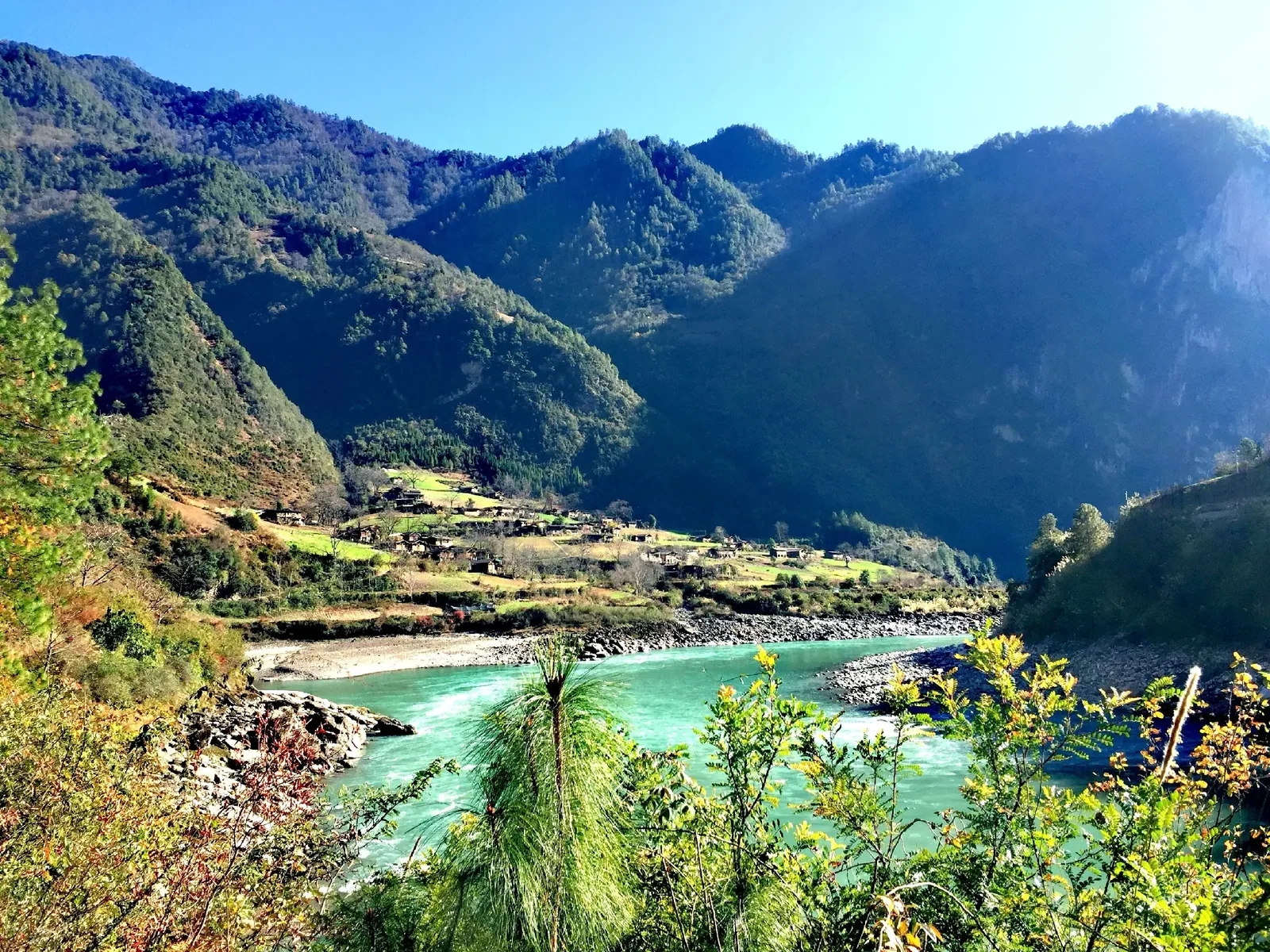
Qiuna Tong is located in Bingzhongluo Town, Gongshan County, Nujiang Prefecture. It is a representative stopover for mountain villages in the northern part of the Nujiang Gorge. Cottages, terraced fields, trees and distant mountains spread out along the terrain, while river valleys and hillsides closely surround the living space. When you come here, the first thing you feel is often the close distance between the village and nature: after turning a corner on the road, you can walk from the house to the edge of the field, and then look towards the higher mountains.
Qiunatong is not just a scenery for sightseeing, the residents' production and daily life are still going on. Looking at house materials, roof forms and courtyard locations reveals how mountain life adapts to rain, slopes and limited flat land; the shape of fields and crops show how people use the terrain. When traveling, you might as well put aside the idea of looking for the "most primitive village" and focus on the real and specific way of life. This will make the village in front of you easier to understand.
This area is culturally connected to local communities such as the Nu people, and is also located in the mountainous corridors where different ethnic groups communicate. Language, food, architecture and religious space all have content that can be further understood, but each family and settlement has its own specific circumstances. Knowing the story of a road, a house, or a food through local interpretation or permitted communication is more meaningful than summarizing an entire culture with external labels.
Walking around the village provides perspectives from different heights. Walking along the public road, you can see how the houses and farmland are connected as a whole; stopping at the formal viewing position, you can see the proportion between the valley and the village. The seasons change the color of the fields, and clouds and fog will continue to cover or reveal distant mountains. These changes can be incorporated into the picture when taking photos. Don’t be disappointed if you don’t see flowers blooming or sunny snowy peaks. The wooden houses, fields and cooking smoke in ordinary weather still have the quality of life.
The convenience of the residents should be put first when visiting. Ask questions before entering the courtyard and photographing people and indoor spaces. Do not trample crops, and do not use farm tools or household utensils to pose for photos. The road has a slope and may be slippery after rain, so wear non-slip shoes and limit your walking distance. If you plan to go on a longer mountain hike, you should check the route and guide conditions separately, and do not extend a relaxing village walk directly into an unprepared mountain crossing.
Qiunatong is usually connected to Bingzhongluo and other stopping points in the Nujiang Gorge. The itinerary needs to allow flexibility for mountain passes, weather and road changes. If you have plenty of time, arrange fewer long-distance transitions and spend more time walking slowly in the village, so you can better appreciate the rhythm here. What is worth remembering is how people settle down and live in the mountains and valleys: houses lean against the slopes, fields follow the road, the sound of the river continues to come from the distance, and travelers can see the real home behind the scenery during a quiet stay.
Make this stop part of your journey
Share your travel dates and group size. Your travel adviser can work this place into a Yunnan itinerary that suits you.