


Yunnan · Nujiang & western Yunnan
Cangyuan
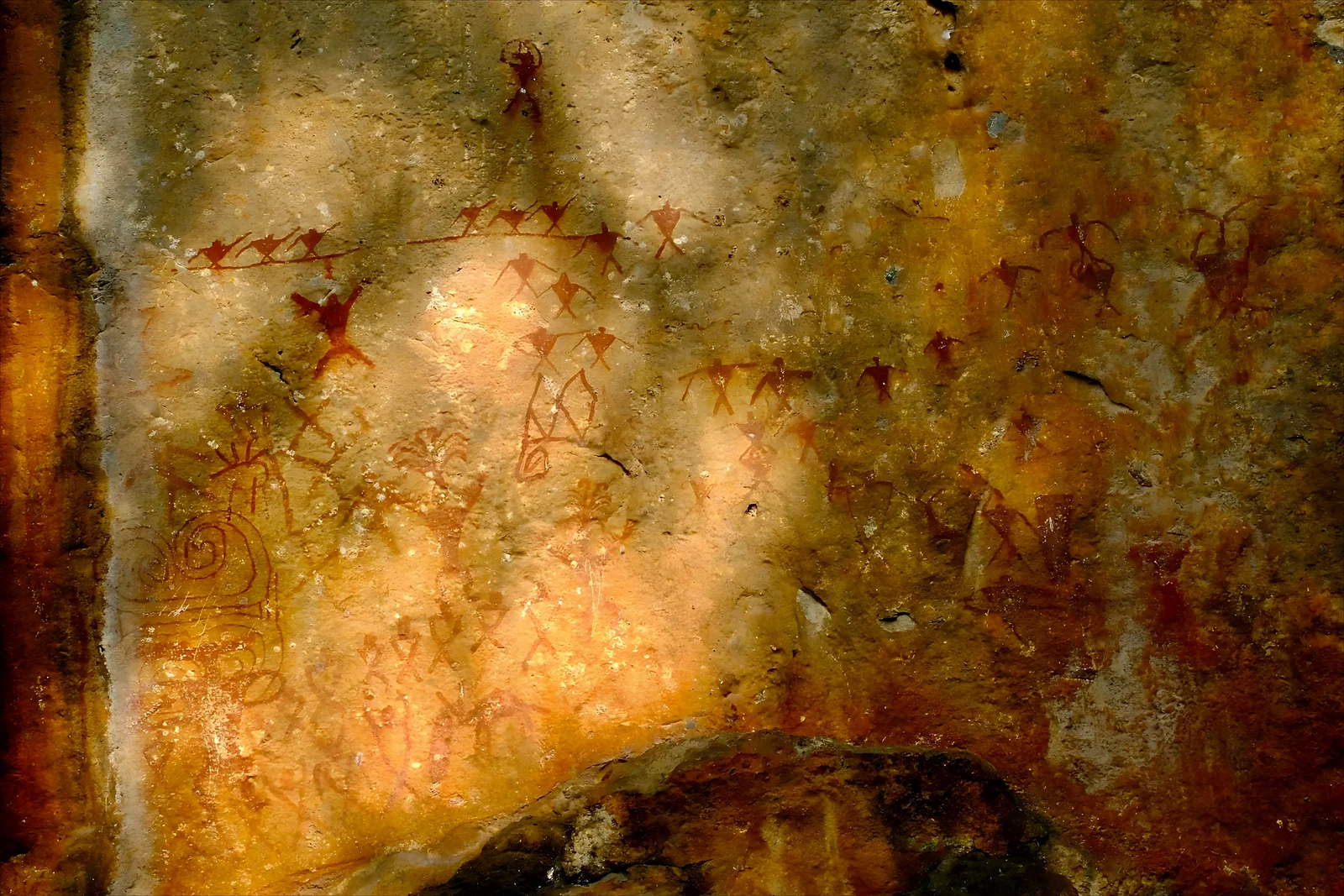
Cangyuan is located in Cangyuan, Lincang, Yunnan. It is an important window for understanding ancient rock paintings and mountain culture. The red image is attached to the rock wall and forms a viewing environment together with the surrounding valley, vegetation and sky. They are not like stand-alone exhibits in a museum, where the background is the natural rock that holds the image. The most meaningful way to come here is to observe first and then listen to the explanation: look at the position, lines and combinations of the images, and understand how early humans left expressions on the rocks.
People, animals and scenes of different activities can be identified in the rock paintings, but there is not always a single answer to the meaning of a specific image. Interpretations of dance, hunting, group activities, etc. help today's tourists get closer to the lives and concepts of ancient people; at the same time, respect for the unknown should be retained. Don’t take the speculations in the tour as a confirmed story, or simply understand all the characters’ gestures as the same ritual. The value of rock paintings includes the fact that it makes people think about how images can become a way of recording and communicating.
Viewing the petroglyphs requires patience. If you stand too far away, you will easily see only a patch of red; if you get close enough, you will find that there are density and direction between the lines. You can first look for a clear figure, then follow the surrounding images to understand the overall layout, and pay attention to whether the shape of the rock face participates in the composition. Changes in natural light also affect the recognition effect. Shadows, moisture and weathering marks may change the visual experience, so on-site observations are often different from the flat pictures in books.
The mountainous environment surrounding Yahua Valley provides a background for understanding the remains. The location of river valleys, trees, roads and settlements can help people imagine how people lived here in the past, but they cannot be used to make up the specific age and plot of a painting at will. Combining formal exhibitions and explanations to distinguish information that is already based on evidence and issues that are still being studied will make the visit more in-depth. It is also an interesting way for children to learn by comparing ancient images with today's texts and logos.
Cultural relic protection is the most important boundary during the visit. You should walk along the open route and do not touch, trace, splash water or leave engravings near the rock wall, and do not use strong light to see the colors clearly. Whether shooting is allowed and whether flash can be used should comply with the on-site requirements. The valley trail may have slopes and slippery locations. Wear shoes that are easy to walk on and allow time for going up and down slopes and stopping for observation. This is more suitable than rushing to take a few panoramic photos.
During the itinerary in western Yunnan, Cangyuan usually needs to be arranged separately in conjunction with local transportation, and is not suitable for temporarily adding a day trip to Dali or Lijiang based on the distance on the Yunnan map. If we want to understand Wa villages and local culture at the same time, we should understand contemporary community life and ancient rock art research separately, and not simply equate them. It is also rewarding to leave here with questions: why are these lines drawn here, and what kind of wind and rain have gone through, so that people today can still encounter distant expressions in the valley.
Make this stop part of your journey
Share your travel dates and group size. Your travel adviser can work this place into a Yunnan itinerary that suits you.