


Yunnan · Dali
Shaxi
Shaxi is located in Jianchuan County, Dali Prefecture, in a relatively open basin between mountains. Sideng Street, the ancient stage, Xingjiao Temple and surrounding lanes together constitute the first scene of many people's introduction to Shaxi. It is closely related to the history of transportation and trade on the Tea-Horse Road, but today's appeal is not limited to the name "Ancient Road." The shade of trees in the square, the fields beside the village, the bridge over the river and the daily life of residents keep the historical space at a scale where walking, staying and communication are possible.
Walking to the Sideng Street area, you can first see how the public space organizes the buildings. The stage, the temple and the street are opposite each other. The memories of fairs and gatherings remain in the open space, and the surrounding shops and courtyards bring it back to daily life. It's easier to understand the layout by standing in the same spot and turning around slowly than by rushing down Main Street. The architectural details are also worth a closer look: doors, windows, wooden structures, eaves and stone paving, each recording traces of different uses and maintenance.
The Ancient Tea Horse Road is not an identical stone road from beginning to end, but a connection between multiple transportation and trade networks in history. As an important settlement among them, Shaxi can be understood through markets, temples, business travel and local life. When visiting, combined with formal explanations, understanding how goods, people and culture come and go here is more informative than just looking for "the footprints of the caravan". History is not a single legend, but the long-term accumulation of many ordinary transactions and exchanges.
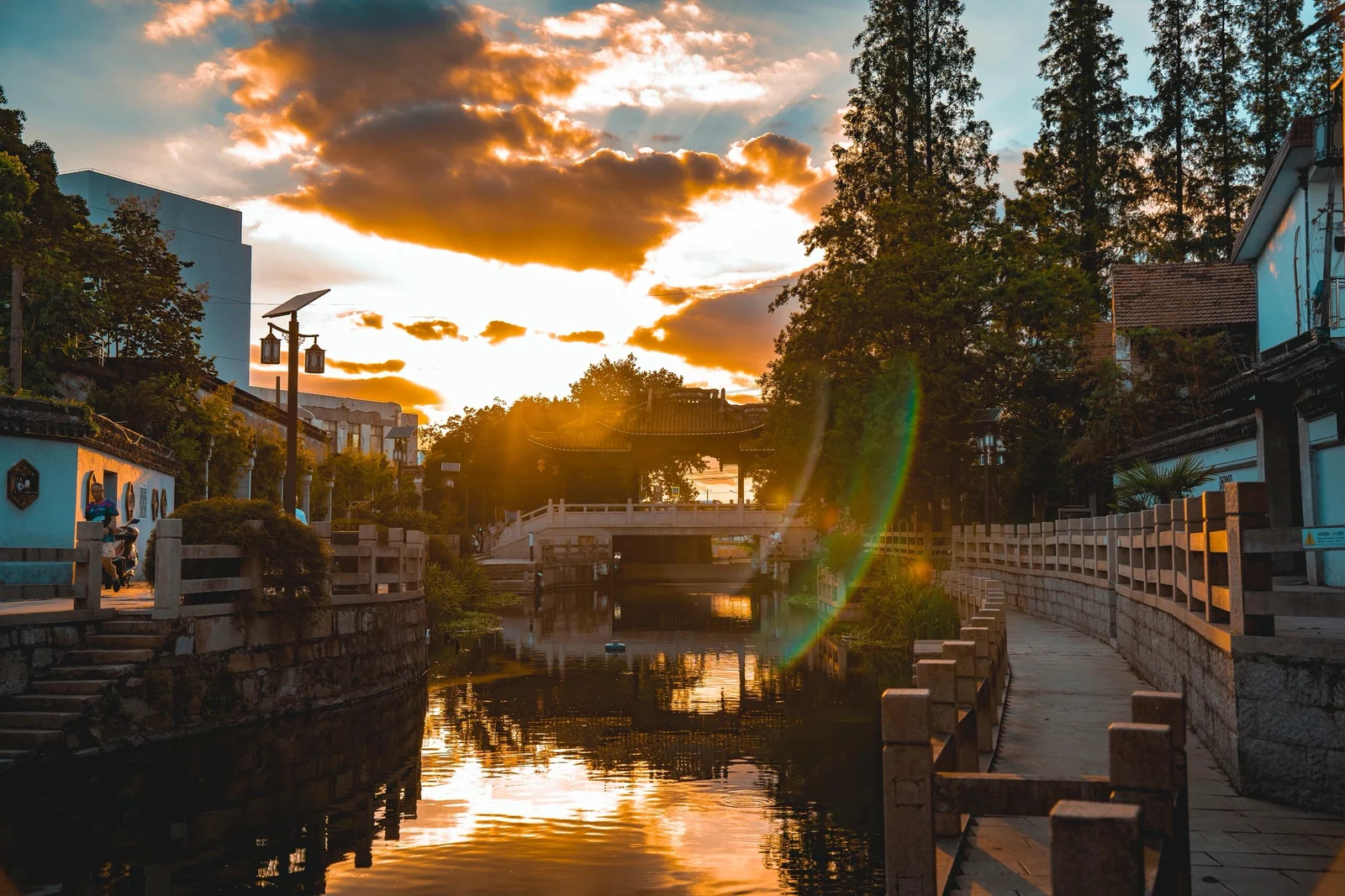
Away from the core neighborhood, rivers and fields give Shaxi a more relaxed side. Walking along the public road to the edge of the village, you can see the houses gradually giving way to farmland, bridges connecting life on both sides, and the distant hillsides becoming the background. The early morning and evening light changes the color of the fields, and the flowers and crops change with the seasons. When taking photos, you don’t have to focus only on the most popular buildings. The life on the street corner, the shadows of trees by the bridge and the mountains at the end of the village road can also show the temperament of the ancient town.
Shaxi is suitable for slow living and walking, but being quiet does not mean that residential boundaries can be ignored. Courtyards, fields and religious spaces all have their own uses. Ask before entering and taking photos, and do not use daily utensils as random props. Streets and cobblestone roads may be slippery after rain. When taking elders or children with you, you can shorten the route and arrange more time to sit and rest. If you want to learn about handicrafts or local food, choosing a space with actual production and communication will create a more memorable experience than simply buying souvenirs.
Shaxi can form a high-level cultural itinerary with Shibaoshan, or it can be a stopover between Dali and Lijiang, but transportation needs to be arranged according to the actual road. If you only stop for an hour in a hurry, you can often only see the square and a few buildings; if you stay overnight, you can feel the different rhythms after the shops close and when the village wakes up in the morning. The most cherishable thing about Shaxi is that the historical street market can still accommodate current life: the roads of the past have not completely disappeared, but continue to exist in the form of squares, bridges, courtyard gates and daily traffic.
Make this stop part of your journey
Share your travel dates and group size. Your travel adviser can work this place into a Yunnan itinerary that suits you.