


Yunnan · Dali
Chongsheng Temple Three Pagodas
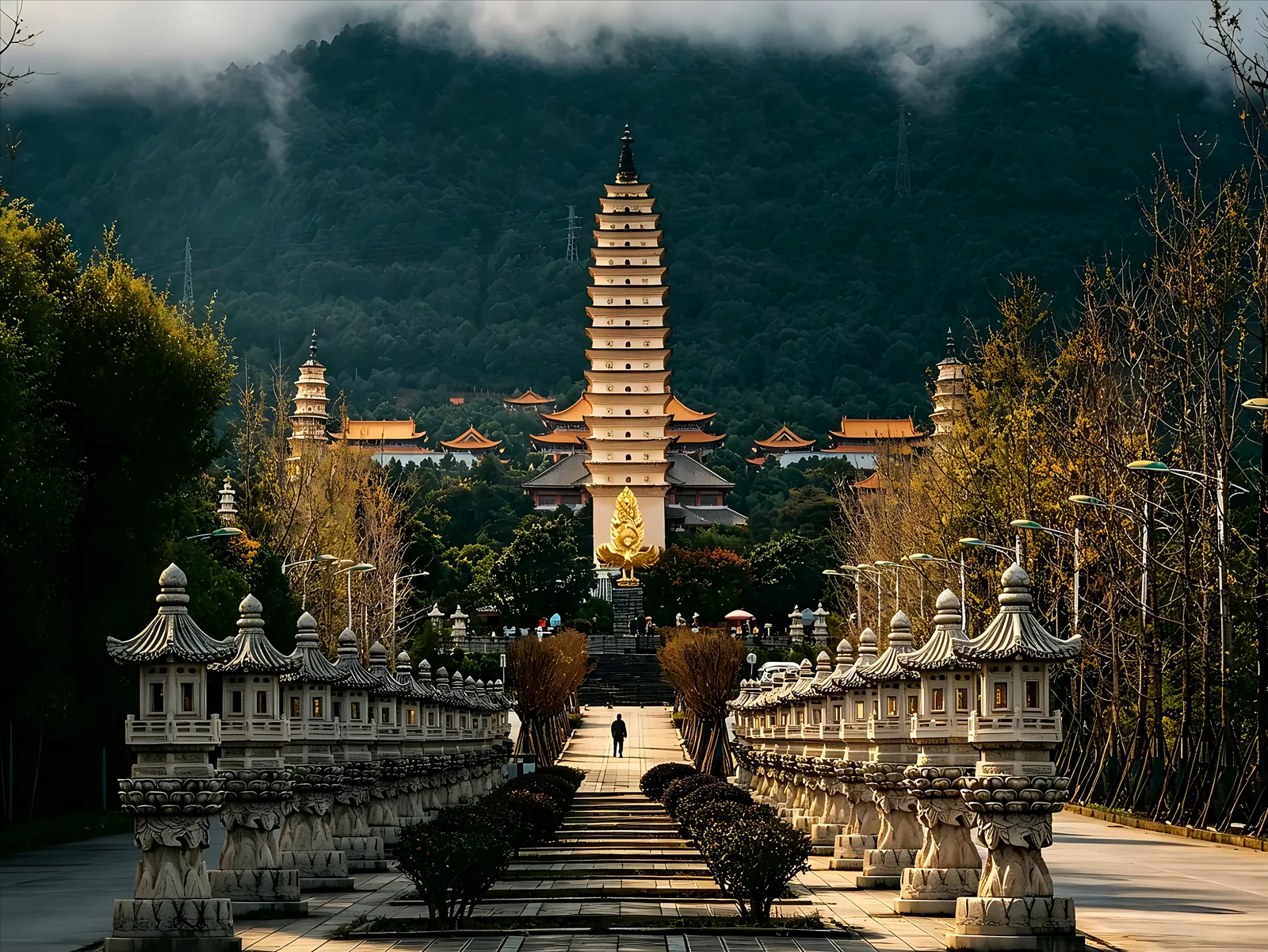
Chongsheng Temple Three Pagodas is located on the north side of Dali ancient city and at the east foot of Cangshan. The three towers stand in an open environment in a combination of one large and two small, with mountains behind them and the terrain in the direction of Erhai in front. They are not only the iconic outline of Dali, but also important objects for understanding local history, religion and architecture. When you first arrive, you can first look at the overall proportions from a distance, and then gradually get closer to observe the details of the tower, so that the macro impression and the specific structure complement each other.
The Qianxun Tower in the center and the small towers on both sides have their own characteristics in shape, proportion and visual focus. The tower body is tapered layer by layer to make the vertical lines appear tall and straight; the surrounding white space strengthens the relationship between the three towers. When viewing, you don't have to just look for the standard front. If you look to the side or slightly farther away, you can see how the three towers change their front and rear positions according to the viewing angle. If combined with historical explanation, you can also understand why different construction periods, repairs and archaeological discoveries give this group of buildings a value beyond their appearance.
There is a close connection between the Three Pagodas and Chongsheng Temple, but the ancient pagodas and the temple buildings seen today are not in the same historical state. When visiting, distinguishing between historical relics and spaces that were later restored and constructed can establish a more accurate understanding. The axis of the temple, courtyards and temples provide a long walking tour, and also allow visitors to shift from looking at the ancient towers in the distance to understanding the layout of religious buildings. Those interested in architecture can compare the different feelings between the independent volume of the tower and the enclosed space of the palace.
Reflection is a common photography theme of the Three Towers. When the water is calm, the towers and mountains will echo up and down in the picture. However, wind, water level, and light will all affect the results, so you don’t have to wait long for your photo to be copied. You can also take pictures of the relationship between the tower body and the branches, the changes in light and shade when mountain clouds pass by, or find a quieter viewing angle in the courtyard. When putting people into the picture, pay attention to retaining the complete scale of the building, which can often express the momentum of the Three Towers better than just cutting off part of it.
The scenic area is relatively large. If you want to see the ancient pagodas, reflections and main temple spaces, you need to consider walking and resting together. When taking care of the elderly or children, you can first determine the part you are most concerned about, and then decide whether to continue in depth based on your physical strength. Keep quiet in religious sites, follow photography and visiting requirements, and do not touch cultural relics or enter restricted areas. The explanation can supplement historical information that cannot be seen with the naked eye, and is suitable for tourists who want to further understand Dali culture instead of just taking away a photo of a landmark.
The Three Towers can be arranged in adjacent time periods with Dali ancient city, Cangshan Foothills, etc., but it should still be avoided to continuously fill up multiple scenic spots that require walking. The light is different in the morning and evening. You can see the mountain clearly on a clear day, but the outline of the tower is more prominent in cloudy weather. Looking back from a suitable position, you will find that the beauty of the Three Towers does not only belong to the building itself, but also comes from the environment it constitutes with Cangshan, Erhai and the ancient city. By understanding this relationship, Dali's history and geography will be more clearly connected.
Make this stop part of your journey
Share your travel dates and group size. Your travel adviser can work this place into a Yunnan itinerary that suits you.