


Yunnan · Tengchong
Heshun
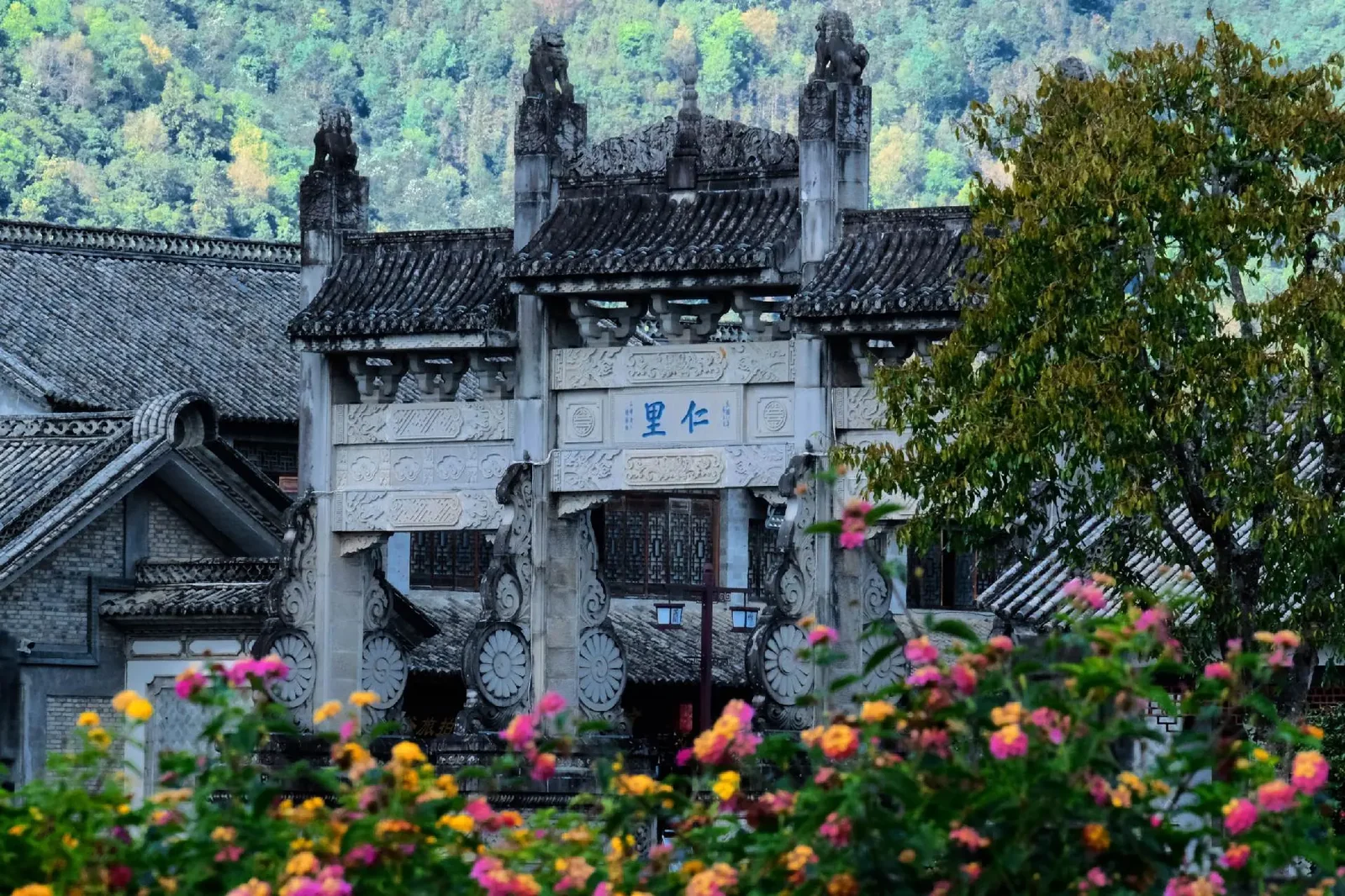
Heshun is located in Tengchong, an ancient town closely related to the history of overseas Chinese hometown. Stone alleys, courtyards, ponds and fields are intertwined. From a distance, the roofs are spread out along the slope. From a closer look, you can see the different details of the gatehouse, window lattice and paving stones. The attraction here is not just the preserved age of the buildings, but also how the experience of people moving out to make a living and stay connected to their hometowns remains in the town through the homes, public facilities and local memories.
When entering Heshun, you can first observe the overall environment from the outer edge of the ancient town. There is no rigid separation between the village and the paddy fields. The shadows of trees and stone bridges by the pond give the building a broad outlook. After entering the alley, the space becomes compact again, and the stone walls and eaves divide the light into different sections of light and dark. Walking slowly, you can see the way the houses conform to the terrain, and you can also understand why a small town can present a quiet pastoral and meticulously crafted temperament at the same time.
The culture of overseas Chinese needs to be understood based on the specific location. The Heshun Library, ancestral hall and related exhibitions provide an entrance to understand the educational concepts, social connections and external exchanges of the villagers. When visiting, you may want to pay attention to the stories behind donated buildings, books and buildings, rather than just using them as photo backgrounds. The Chinese layout and decorative details of different courtyards may also reflect the aesthetic and life experiences brought back by outsiders, bringing interesting changes to traditional spaces.
Daily life in the ancient town is also worth setting aside time for. Watching residents come and go along the lanes, eating a local meal on the street, and sitting for a while facing the fields can slow down the pace of travel. Tengchong's ersi rice noodles, erkuai rice cakes and other foods can be used as a starting point to understand the local taste. The specific selection does not need to be limited to the list of famous stores. If you are interested in handicrafts or local history, you can choose an exhibition hall or shop where you are willing to have serious exchanges and turn your stay into a meaningful contact.
The smooth stone roads and slopes are suitable for walking slowly, but some roads may become slippery after rain. When taking elders on a trip, you can start on a gentler road and alternate climbing and resting arrangements. Many courtyards are still living spaces, and what can be seen at the door does not mean that they can be entered at will. When taking photos, respect the residents and visiting rules, do not extend the lens into private rooms, and try to avoid locations that affect traffic, so as to retain the quiet and natural atmosphere of the ancient town.
In the Tengchong itinerary, Heshun is suitable to be combined with Huoshan, Rehai or Beihai on separate days. You can get to know the landforms and life in the hometown of overseas Chinese at the same time. If you have enough time, you can stay one night to experience the different flow of people and light in the morning and night; if you visit for a short time, you can choose a section of outer countryside, a cultural space and several lanes. Heshun does not need to rely on intensive check-in to prove its value. It is more suitable for slowly revealing its own story in the details of a turn, an old book or a door.
Make this stop part of your journey
Share your travel dates and group size. Your travel adviser can work this place into a Yunnan itinerary that suits you.