


Yunnan · Dali
Jizushan
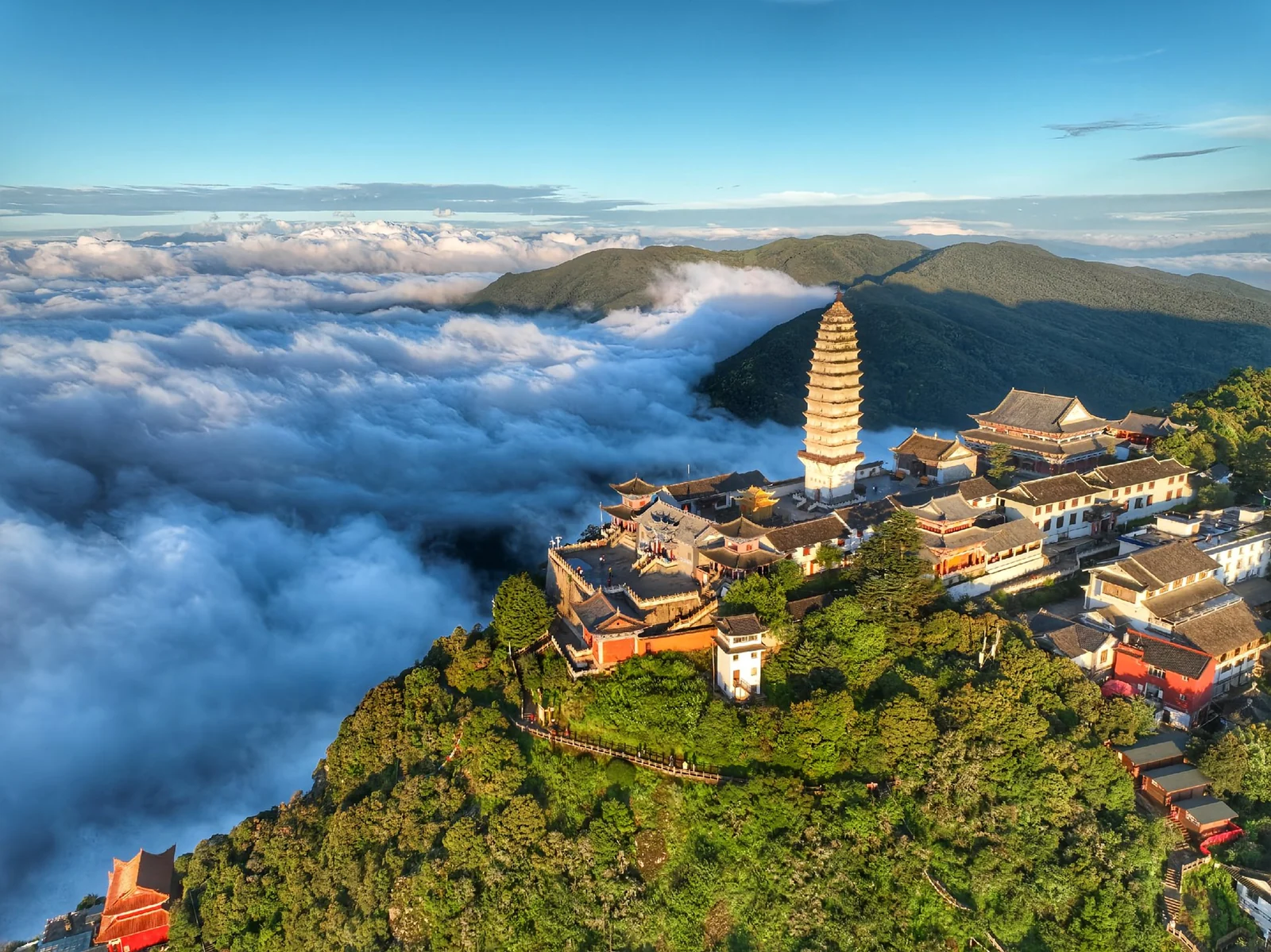
Jizushan is located in Binchuan County, Dali Prefecture. It is a mountain with both Buddhist culture and mountain forest landscape. Its name is related to the shape of the mountain. Temples, ancient roads, trees and high views together constitute the tour content. Different from mountain climbing that aims at a single peak, Jizushan is suitable for gradually understanding while walking: from the buildings at the foot of the mountain to the steps in the forest to the more open viewing position, each section has a different space and atmosphere.
Jizushan plays an important role in Buddhist culture. Related legends and mountain pilgrimage traditions give the mountain a meaning beyond the natural landscape. Temples are not simply photo-taking backdrops; the buildings, offerings, and activities all have religious backgrounds. When visiting, you can learn about its historical and cultural connections through formal explanations, while distinguishing between faith narratives and verifiable historical facts. Keeping quiet and following etiquette will make the visit more leisurely and respect those who perform religious activities here.
Walking along the mountain road, the trees create a transition between different temples and viewing spaces. The tree crown blocks part of the sky, the steps turn along with the slope, and the occasionally opened view brings people back to the mountains in the distance. You can pay attention to how the buildings are arranged according to the mountains and how the courtyards use the terrain to form layers, rather than just looking at the names of the palaces. For those who like to walk slowly, the forest road itself is part of the experience, and breathing, footsteps and surrounding sounds will gradually adjust to a smoother rhythm.
The wide view from the higher position is one of the reasons why many people yearn for Jizushan. When the weather is fine, you can see mountains and rivers in the distance, but when clouds and fog appear, you may only see nearby trees and roof eaves. Scenes such as sunrise and sea of clouds require the coordination of natural conditions and should not be regarded as fixed programs. If you want to stay overnight for the morning view, you should first check the accommodation location, method of going up the mountain, and early morning transportation to avoid using unconfirmed old guides to arrange a route that is difficult to connect.
Jizushan Tours involve continuous steps and height differences, and cableways and scenic transportation cannot completely replace walking. If you are traveling with elders or those with weak physical strength, you can shorten the route and choose one or two places to focus on. Clothing should take into account the temperature difference on the mountain, and the stone steps should be slippery after rain; do not enter closed forest areas, make loud noises around temples, and do not touch religious artifacts at will. When you want to take photos inside the palace or people, first understand the rules of the venue and the other person’s wishes.
When traveling to Dali, it usually needs to be arranged as a more complete day or a more leisurely stay, and cannot simply be regarded as a scenic spot that can be visited for a few minutes on the way. It can be combined with the traffic in the Binchuan direction, or it can become an independent stop with the theme of mountains, forests and religious culture. Even if you don't encounter the majestic sea of clouds, you can still get a quiet and fulfilling experience by watching the temples and forests along the ancient road. What is really worth taking away is the profound atmosphere created by the mountain nature and the long tradition of mountain pilgrimage.
Make this stop part of your journey
Share your travel dates and group size. Your travel adviser can work this place into a Yunnan itinerary that suits you.